
GAF Camelot II vs. Slateline: Choosing the Right Designer Shingle in the Blue Ridge Region


In the Blue Ridge Mountains, roofing is a mix of appearance and performance through wind, homes at different elevations, temperature and humidity swings, and long-term exposure to sun.
For homeowners around Smith Mountain Lake, Roanoke, and the surrounding valleys, the right shingle is a balance of durability, structure, and design.
GAF is one of the most trusted manufacturers in the country, and two of their designer shingle options that come up often are Camelot II and Slateline. While both sit above standard architectural shingles, they serve slightly different purposes depending on the home and the environment.
Overall Look and Style
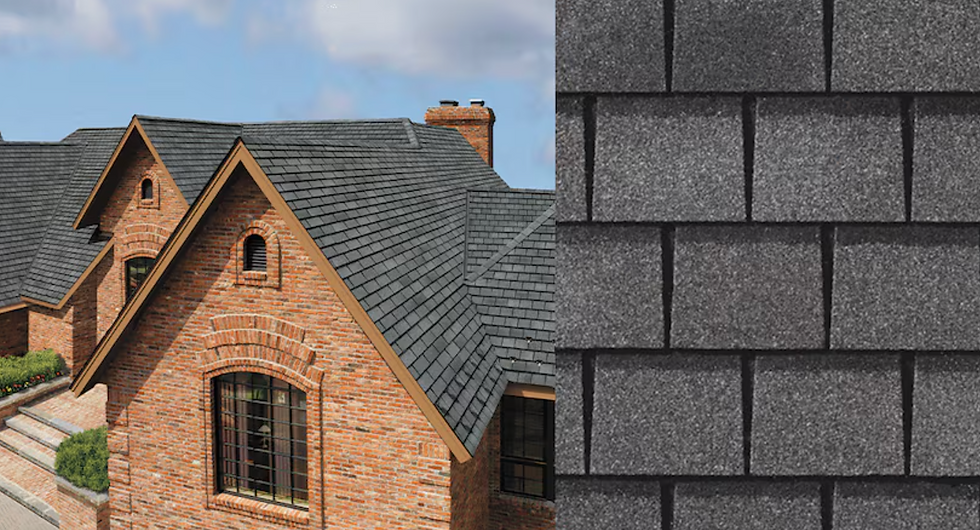
GAF Camelot II leans more traditional. It’s designed to replicate the look of hand-cut slate, with a scalloped edge and layered profile that adds depth. On homes with more classic architecture or natural surroundings, it blends in well and feels more “built into” the landscape.
GAF Slateline takes a different direction. It has a cleaner, more uniform edge and a flatter profile, giving it a sharper, more structured look. It tends to fit better on homes with more modern lines or where symmetry and consistency matter more than texture.
Size, Weight, and Presence on the Roof
Camelot II is a heavier, more substantial shingle overall. That added weight translates into a thicker visual profile and often a more durability once installed.
Slateline is lighter and slightly smaller, which can make installation more straightforward, keeping material and labor costs lower. It still performs well, but it doesn’t have quite the same physical presence on the roof.
Wind Performance in the Blue Ridge
Wind matters more here than most people realize, especially around elevated terrain and open water near Smith Mountain Lake.
Camelot II carries a higher wind rating, making it the stronger option in areas where roofs take more exposure. Ridgelines, lakefront properties, and homes sitting in the open rolling hills of the counties tend to benefit from that extra margin.
Slateline still performs well and meets standard high-wind requirements, but it’s better suited for more protected areas like valleys or neighborhoods with natural wind breaks.
Warranty Coverage
Both shingles come with GAF’s lifetime limited warranty structure, which includes coverage for manufacturing defects and algae resistance.
The main difference is in wind coverage. Camelot II is rated for higher wind speeds, which aligns with its heavier build. Slateline carries slightly lower wind coverage but still meets the needs of most residential applications in this region.
As always, warranty value depends heavily on proper installation and system components, not just the shingle itself.
Cost and Value
Camelot II is typically the more expensive option. You’re paying for added material, higher wind resistance, and a more detailed design.
Slateline is more economical while still delivering a strong visual upgrade over standard architectural shingles. For many homeowners, it hits the balance between cost and appearance without stepping into premium pricing.
What Works Best in Our Area
In the Blue Ridge Mountains, Smith Mountain Lake, and the Roanoke Valley, the decision usually comes down to exposure and style.
Homes in higher elevations or along the lake often lean toward Camelot II for the added wind resistance and heavier build.
Homes in more protected areas, or where budget plays a bigger role, often go with Slateline and still get a clean, high-end look.
There isn’t a wrong choice here. It’s about matching the product to the environment and the home.
Final Thought
Both Camelot II and Slateline are a step above standard roofing systems. The difference is in how they perform over time and how they fit the structure they’re installed on.
As a GAF Master Elite contractor, Mason Roofing approaches every project with that in mind.
If you’re considering a roof replacement in the Blue Ridge region, we’re happy to walk the property with you and give a straightforward recommendation based on what actually makes sense for your home.


Comments